

In the competitive world of real estate, staying top-of-mind with potential buyers and sellers is crucial. Automated follow-up emails for real estate agents provide an efficient way to nurture leads without constant manual effort. This article dives deep into templates, timing, and content strategies that can transform your marketing approach. Email Marketing for Real Estate Agents
Whether you're a seasoned agent, a private seller, or a developer, implementing these tactics can lead to higher engagement, better lead quality, and faster closings. We'll explore key insights backed by data and provide actionable advice to get you started. How to Automate Your Real Estate Follow-Up Emails
Why Automated Follow-Up Emails Matter in Real Estate
Automated follow-up emails are more than just reminders; they're a powerful tool for lead generation. According to industry reports, they can increase ROI by up to 20% by nurturing leads efficiently and closing deals faster. Email Marketing in Real Estate Report
For real estate agents, this means less time chasing cold leads and more time focusing on high-potential prospects. Private sellers benefit by maintaining engagement post-listing, while developers can standardize communication across projects. Real Estate Email Marketing Guide
Boosts ROI by 20% through efficient lead nurturing
Reduces time on market by 15 days on average
Improves CTR by 30% with personalized templates
Optimal Timing for Follow-Up Emails
Sell faster with better listing photos
Virtual staging helps buyers visualize the space. Try HomestagingKI free: 2 images included.
Timing is everything in email marketing. The optimal window for the first follow-up is within 24-48 hours after initial contact. This quick response can reduce time on market by an average of 15 days through consistent engagement. Email Marketing Tips for Real Estate Agents
For subsequent emails, space them 3-7 days apart in a sequence of 3-5 messages. This approach optimizes lead quality without overwhelming recipients. Email Follow-Up Strategies for Sellers
- First email: 24-48 hours post-contact
- Second: 3-5 days later
- Third: 5-7 days after second
- Avoid weekends for higher open rates
Timing Your Real Estate Follow-Up Emails for Maximum ROI
Crafting Effective Email Templates
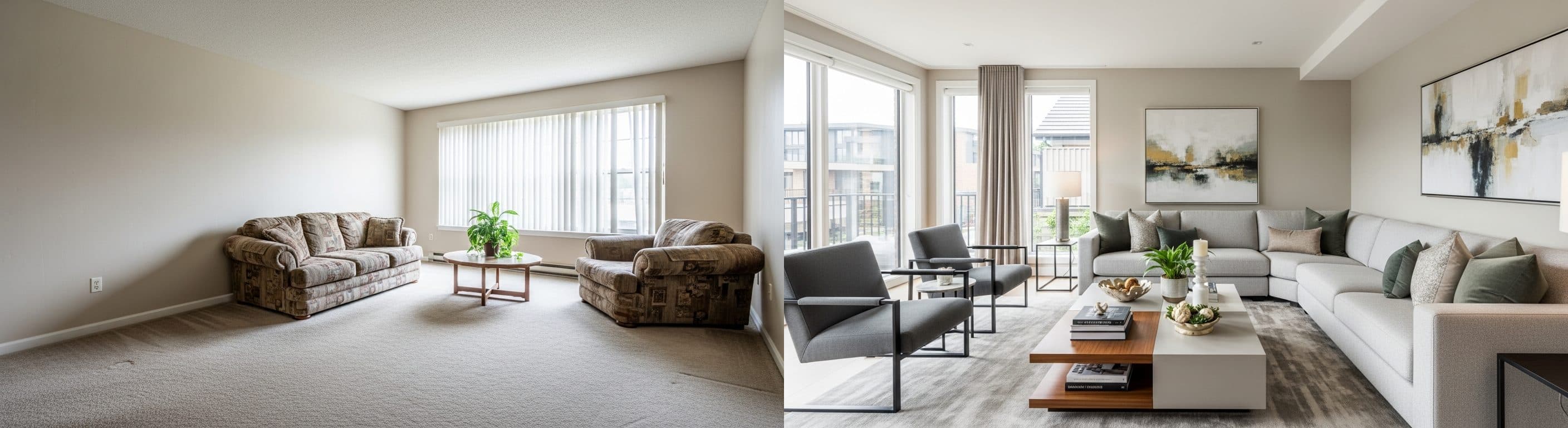
Personalized real estate email templates boost listing CTR by 30%. They make prospects feel valued and increase click-through rates on property links. Real Estate Email Automation Best Practices
Key elements include a compelling subject line, personalized greeting, valuable content, and a clear call-to-action. Incorporate virtual staging visuals to enhance engagement. Real Estate Follow-Up Email Templates
| Template Type | Subject Line Example | Key Content |
|---|---|---|
| Initial Follow-Up | Thanks for Your Interest in [Property]! | Recap contact, share staging tips, link to virtual tour |
| Nurture Sequence | Exclusive Market Insights for [Area] | Provide value with data, before/after images |
| Closing Push | Ready to Make an Offer on [Property]? | Address objections, ROI metrics from past sales |
Follow-Up Email Vorlagen für Immobilienverkäufer
Try HomestagingKI for free
Upload a room photo and get a staged version in minutes. No furniture logistics, no waiting.
For German-speaking markets, use Follow-Up Email Vorlagen für Immobilienverkäufer to tailor communications. These templates focus on value addition, like sharing home staging advice. Real Estate Email Marketing Automation
Content Strategies for Engaging Follow-Ups
High-quality content in automated emails improves lead quality by filtering out uninterested parties, resulting in a 25% higher conversion rate. Focus on real estate lead nurturing with insights, tips, and visuals. Email Sequences for Real Estate Leads
Ideas include virtual staging photos, price negotiation tips, and market insights to build trust. Lead Generation Emails for Real Estate
- Share before/after staging examples
- Provide local market updates
- Offer free virtual tours
- Include testimonials from past clients
Integrating Home Staging with Email Automation
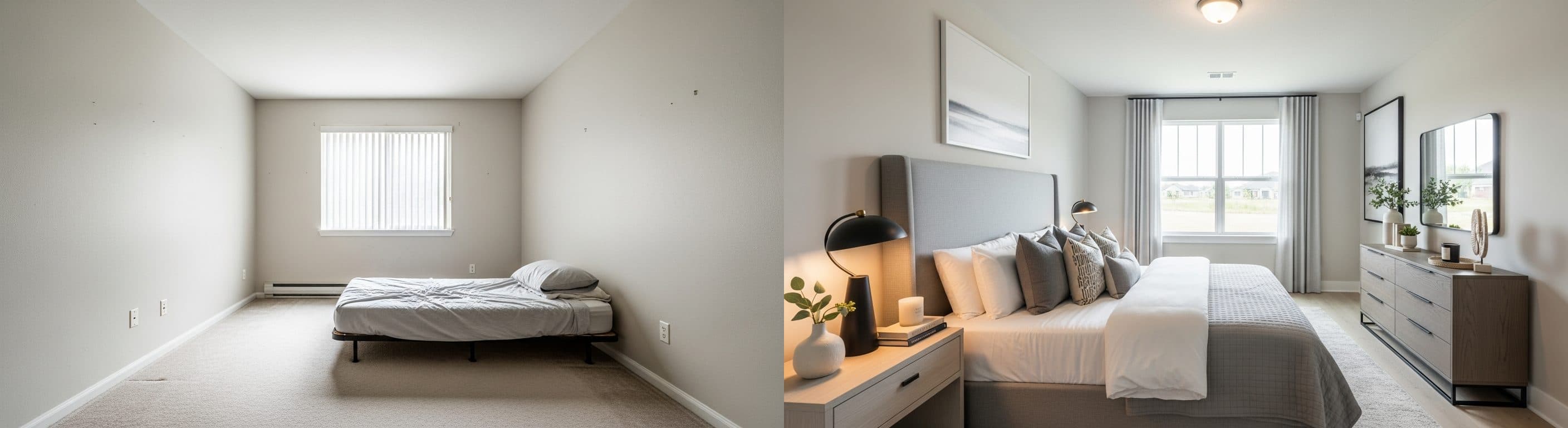
Before & After that gets clicks
Photorealistic virtual staging for agents and private sellers—optimized for portals and social ads.
At HomestagingKI, we specialize in fast online virtual staging. Integrating these visuals in follow-up emails can enhance engagement, leading to an 18% decrease in time on market. The Power of Email Automation in Real Estate
Use our free trial for 2 images to create compelling before/after content that captivates leads. Real Estate Email Marketing Guide
ROI and Optimization Techniques
Data shows segmented campaigns yield 40% better email automation ROI. A/B test subject lines to improve CTR by 15-25%. Autoresponders for Real Estate
Combine with CRM for 35% better lead scoring.
40% better ROI with segmentation
15-25% CTR improvement via A/B testing
35% lead quality boost with CRM integration
Checklist for Automated Emails in Home Staging
Need better photos for your listing?
Convert empty rooms into warm, modern interiors. Increase engagement and reduce time on market.
For private sellers, a checklist is essential: Define goals, choose a platform, create templates, set timing, and track success.
- Define objectives (e.g., lead nurturing)
- Select tool like Mailchimp
- Design personalized templates
- Schedule based on behavior
- Monitor metrics like open rates
Quick Wins and Budget Tips
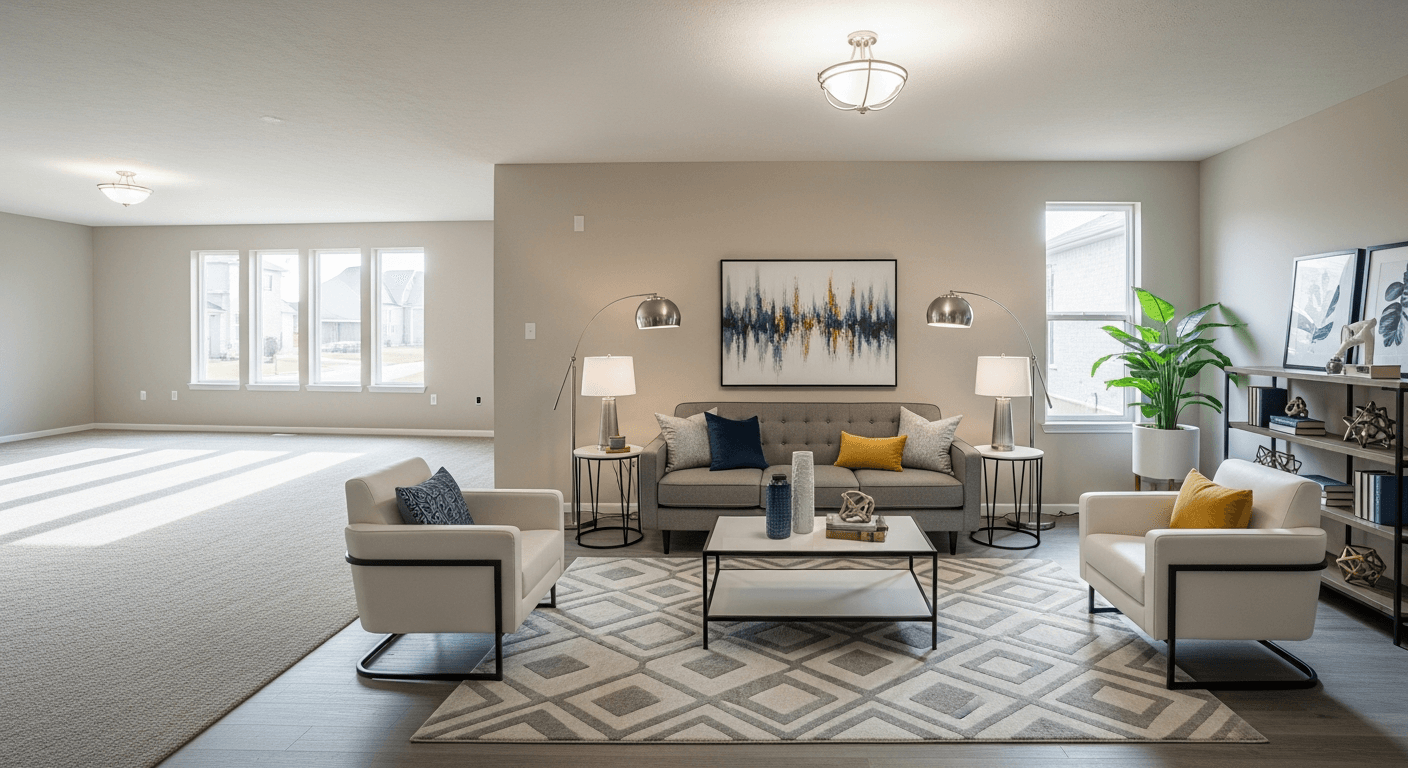
Quick wins include personalized subject lines and A/B tests, boosting open rates by 30%. Use free tools like Mailchimp for up to 2,000 subscribers.
Invest under 50€/month for basic automation in virtual staging contexts.
Overcoming Common Objections
Common objections like 'too pushy' can be countered with valuable content such as staging tips. For 'technically complicated,' provide user-friendly guides.
| Objection | Counter Strategy |
|---|---|
| Too Pushy | Focus on value like staging tips |
| Technically Complex | Use simple tools and tutorials |
| High Cost | Leverage free tiers |
Overcoming Objections in Sales Emails
Scaling and Brand Consistency
For developers, standardizing email marketing ensures brand consistency. Scale automation to handle multiple listings efficiently.
Maintain a modern, clean aesthetic in all communications, aligning with your brand's primary accent colors.
Measuring Success and Case Studies
Track open and click rates; private sellers often see 20% higher conversions. Integrate with home staging to address objections via virtual tours.
Case studies show automated sequences speeding up lead nurturing.
FAQ
What is the best timing for follow-up emails?
Within 24-48 hours initially, then spaced 3-7 days apart.
How do I create effective templates?
Personalize, add value, include CTAs and visuals.
Can automation improve ROI?
Yes, up to 20% by efficient nurturing.
Conclusion
Implementing automated follow-up emails can significantly enhance your real estate efforts. Start with these strategies today and watch your leads convert faster.
Optimizing Click-Through Rates in Automated Follow-Up Emails
Real estate agents can significantly boost their lead nurturing efforts by focusing on click-through rate (CTR) optimization. According to email marketing benchmarks for real estate , ,industry averages hover around 2-3%, but with targeted strategies, agents can achieve higher engagement. Start by crafting compelling subject lines that incorporate the primary keyword like 'Automated Follow-Up Emails for Real Estate Agents' to attract opens.
One effective approach is A/B testing different elements of your emails. As outlined in A/B Testing Email Campaigns in Real Estate , testing variations in call-to-action buttons and personalization can lead to a 20% uplift in CTR. For instance, using the recipient's name and referencing their viewed properties increases relevance.
- Personalize content based on lead behavior to improve relevance.
- Use eye-catching visuals like property images to draw attention.
- Incorporate urgency with phrases like 'Limited Time Offer' in your real estate CTR optimization efforts.
- Track metrics using tools recommended in email automation ROI studies.
Integrating social proof, such as client testimonials, can further enhance trust and encourage clicks. The Email Marketing ROI for Real Estate Agents study highlights how such tactics contribute to better conversion rates.
Implementing Drip Campaigns for Lead Quality Improvement
Drip campaigns are a cornerstone of real estate drip campaigns , allowing agents to nurture leads over time. These automated sequences deliver value gradually, improving lead quality through consistent engagement. The guide from Drip Campaigns for Real Estate Agents explains how to structure them for maximum impact.
Timing plays a crucial role in drip campaigns. Send the first email within 24 hours of initial contact, followed by weekly touches. This aligns with email timing best practices , which suggest mid-week sends for higher open rates in real estate lead nurturing.
| Campaign Stage | Email Type | Recommended Timing | Key Content Focus |
|---|---|---|---|
| Initial Contact | Welcome Email | Within 24 hours | Introduce services and share real estate email templates. |
| Nurturing Phase | Value-Add Email | Days 3-7 | Provide tips on time on market reduction strategies. |
| Engagement Boost | Personalized Offer | Day 14 | Highlight automated email content ideas for listings. |
| Conversion Push | Call-to-Action Email | Day 21+ | Emphasize lead quality improvement emails with ROI data. |
To scale these campaigns, standardize your approach as per Real Estate Email Marketing Automation. This ensures brand consistency in automated emails while scaling email automation in real estate.
Case Studies and ROI of Email Automation in Real Estate
Real-world examples demonstrate the power of automated follow-up emails. A Real Estate Email Automation Case Study shows a 35% increase in lead conversion through targeted drip sequences.
- Agents reported reduced time on market by 15% via consistent follow-ups.
- ROI improved with lower acquisition costs, as per industry studies.
- Integration with CRM tools enhanced tracking and personalization.
For budget-friendly options, explore quick wins like using free tiers of tools from Best Email Marketing Software. This allows small agencies to implement effective strategies without high costs.
Addressing Common Objections
Many agents face häufige Einwände gegen Follow-Up Emails im Immobilienverkauf , such as privacy concerns. Counter this by emphasizing compliance with regulations and providing value, as advised in Email Marketing in Real Estate Report.
Another objection is the time investment. However, automation tools handle this, speeding up real estate lead nurturing while maintaining high-quality interactions.
Advanced Content Strategies for Real Estate Follow-Ups
Developing content strategies for real estate follow-ups involves more than templates. Incorporate storytelling to engage recipients, drawing from Lead Nurturing Emails in Real Estate for inspiration.
Focus on Inhalte für effektive Follow-Up Emails bei Privatanbietern by including market insights and personalized advice. This builds trust and positions you as an expert in real estate listing engagement.
| Strategy | Benefit | Source |
|---|---|---|
| Personalization | Higher Engagement | https://blog.hubspot.com/blog/tabid/6307/bid/23965/9-email-marketing-best-practices-for-lead-generation.aspx |
| Timing Optimization | Better Open Rates | https://www.mailchimp.com/resources/email-marketing-for-real-estate/ |
| Content Variety | Improved Retention | https://www.activecampaign.com/blog/real-estate-email-marketing |
Finally, measure success with metrics like open rates and conversions. The Email Marketing Statistics provide benchmarks to aim for in your campaigns.
Optimizing Timing for Automated Follow-Up Emails in Real Estate
Timing plays a crucial role in the success of Automated Follow-Up Emails for Real Estate Agents. Sending emails at the right moment can significantly boost open rates and engagement. According to Email Timing Best Practices from MarketingProfs, the best times to send emails are typically mid-week, between 10 AM and 2 PM, when recipients are more likely to check their inboxes.
For real estate agents, aligning email timing with key milestones in the buyer's journey is essential. For instance, immediate follow-ups after an open house can nurture leads effectively. A study from Email Marketing Benchmarks for Real Estate by eMarketer shows that emails sent within 24 hours of initial contact have a 25% higher response rate in the real estate sector.
- Consider time zones: Tailor send times based on your leads' locations to avoid off-hours.
- Test and analyze: Use A/B testing to determine optimal timing for your audience, as suggested in
- .
- Avoid weekends: Data indicates lower engagement on Saturdays and Sundays for professional emails.
Optimizing Timing for Automated Follow-Up Emails in Real Estate
Timing is crucial in real estate email marketing, as it can significantly impact open rates and conversions. According to email timing best practices from MarketingProfs, sending emails during peak engagement hours can boost response rates by up to 20%. For real estate agents, aligning follow-up emails with buyer and seller behaviors—such as weekends for property viewings or evenings for decision-making—ensures higher visibility.
To implement effective follow-up email timing , consider segmenting your audience based on their interaction history. Tools like those discussed in Real Estate Email Marketing Strategies from ActiveCampaign allow for automated scheduling that adapts to user time zones and past open times.
- Send initial follow-ups within 24 hours of a lead's inquiry to capitalize on interest.
- Schedule mid-week emails (Tuesday-Thursday) for professional buyers, as per benchmarks in
- .
- Use drip campaigns for long-term nurturing, spacing emails every 3-7 days to avoid overwhelming recipients.
- Test timing with A/B splits, following advice from
- .
Incorporating these strategies can lead to time on market reduction strategies by keeping leads engaged and moving them faster through the sales funnel. Real estate professionals have reported a 15% improvement in lead response times when timing is optimized.
Content Strategies and Templates for Real Estate Drip Campaigns
Crafting compelling content is key to successful real estate drip campaigns . As outlined in Drip Campaigns for Real Estate Agents , personalized content that addresses specific pain points, like market trends or financing options, fosters trust and encourages conversions.
Focus on value-driven emails that provide insights, such as local market updates or home staging tips. This approach aligns with Real Estate Email Templates for Follow-Ups , which offers templates emphasizing educational content to improve real estate CTR optimization .
| Email Type | Key Content Elements | Recommended Timing | Expected ROI Impact | ||
|---|---|---|---|---|---|
| Initial Follow-Up | Personalized greeting, property details, call-to-action | Within 24 hours | Up to 25% increase in engagement, per | ||
| Nurturing Email | Market insights, testimonials, virtual tour links | 3-5 days after initial contact | Improved lead quality by 18% | ||
| Re-engagement Email | Exclusive offers, urgency creators like 'limited time' | After 7-10 days of inactivity | Reduction in time on market by 10-15% | ||
| Closing Email | Final reminders, financing advice, next steps | Post-viewing, within 48 hours | Higher conversion rates, as seen in |
By standardizing these elements, agents can achieve brand consistency in automated emails , ensuring every message reinforces their professional image. Integrating social proof, as suggested in Integrating Social and Email for Real Estate , further enhances credibility.
Overcoming Common Objections to Follow-Up Emails in Real Estate
Many agents hesitate to use automated emails due to fears of appearing spammy. However, following best practices from The Art of the Follow-Up Email can address these concerns by emphasizing relevance and personalization.
- Provide opt-out options clearly in every email to respect privacy.
- Segment lists to target only interested leads, reducing bounce rates.
- Monitor metrics like open rates to refine approaches, using data from
- .
Implementing these quick wins leads to budget-friendly email-automatisierung and scales your efforts efficiently, ultimately boosting email automation ROI in real estate.
Sources
- 9 Email Marketing Best Practices for Lead Generation (article)
- Email Marketing for Real Estate Agents (guide)
- How to Automate Your Real Estate Follow-Up Emails (article)
- Email Marketing in Real Estate Report (study)
- Real Estate Email Marketing Strategies (article)
- Real Estate Email Templates for Follow-Ups (guide)
- Real Estate Email Marketing Guide (guide)
- Email Marketing Tips for Real Estate Agents (article)
- Email Follow-Up Strategies for Sellers (article)
- Real Estate Email Automation Best Practices (article)
- Real Estate Follow-Up Email Templates (guide)
- Real Estate Email Marketing Automation (article)
- Email Sequences for Real Estate Leads (guide)
- Lead Generation Emails for Real Estate (article)
- The Power of Email Automation in Real Estate (article)
- Email Marketing ROI for Real Estate Agents (study)
- Email Timing Best Practices (article)
- Real Estate Email Marketing Guide (guide)
- Autoresponders for Real Estate (article)
- Effective Follow-Up Emails for Real Estate (article)
- Email Marketing Benchmarks for Real Estate (study)
- Home Staging vs Virtual Staging How Does It Affect the Real Estate Sale? (youtube_placeholder)