
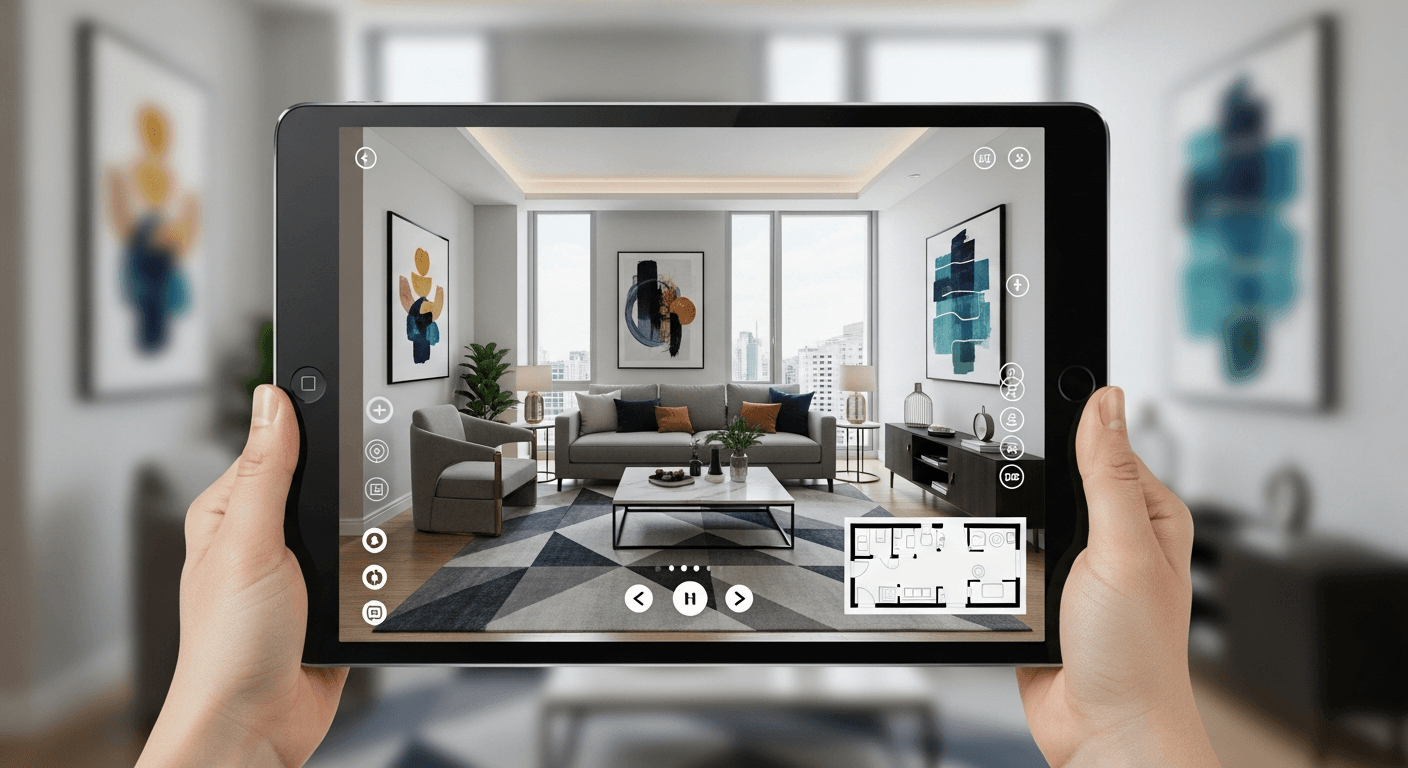
In the fast-paced world of real estate, staying ahead means leveraging cutting-edge technology. Combining virtual tours and AI staging has emerged as a game-changer, offering unparalleled benefits for real estate agents, private sellers, and developers. This approach not only enhances property appeal but also drives significant improvements in key metrics like ROI and time on market.
Why Combine Virtual Tours and AI Staging?
Virtual tours provide immersive, 360-degree views of properties, allowing potential buyers to explore spaces remotely. When paired with AI staging real estate , this technology transforms empty or outdated rooms into visually stunning, personalized environments. The result? Enhanced buyer engagement and faster sales.
According to industry studies, integrating these tools can boost virtual staging ROI by up to 20-30%. Properties appear more appealing, leading to quicker decisions and reduced time on market by 15-25%.
Boosts buyer engagement through immersive experiences
Reduces physical staging costs by 50-70%
Increases listing CTR by 35-50%
Improves lead quality with 40% more qualified inquiries
Benefits of Virtual Home Tours with AI Staging
Sell faster with better listing photos
Virtual staging helps buyers visualize the space. Try HomestagingKI free: 2 images included.
One of the primary advantages is the significant reduction in virtual tours time on market . Data shows that combined virtual tours and AI staging can cut this time by up to 50% for private sellers.
Moreover, real estate listing CTR skyrockets when listings feature AI-staged interiors, drawing more clicks on platforms like Zillow and Realtor.com.
- Enhanced perceived value leading to 25% higher offer prices
- 30% more virtual showings converting to in-person visits
- Mobile-optimized tours increasing CTR on major platforms
Impact on Real Estate Marketing ROI

Calculating real estate marketing ROI becomes straightforward with AI integration. Agents report substantial savings and higher returns due to faster closings and better lead conversion.
| Metric | Improvement with AI + Virtual Tours |
|---|---|
| ROI Boost | 20-30% |
| Time on Market Reduction | 15-25% |
| CTR Increase | 35-50% |
| Lead Quality Improvement | 40% more qualified inquiries |
Best Practices for AI Staging in Virtual Tours
Try HomestagingKI for free
Upload a room photo and get a staged version in minutes. No furniture logistics, no waiting.
To maximize effectiveness, follow these best practices AI staging : Start with high-quality 360-degree photos, use customizable AI tools to match buyer preferences, and ensure realistic rendering.
For virtual staging tools like BoxBrownie or Matterport, integrate AI elements seamlessly to create interactive experiences.
Virtual Staging vs Traditional Staging
Embedding virtual home tours benefits in your listings can lead to higher engagement. Focus on mobile compatibility for broader reach.
Tools and Technologies
Popular AI staging tools include HomestagingKI, which offers free staging for 2 images with fast online results. Pair it with virtual home tours platforms like Kuula or EyeSpy360.
AI Virtual Staging for Different Audiences

Before & After that gets clicks
Photorealistic virtual staging for agents and private sellers—optimized for portals and social ads.
Real estate agents can leverage AI virtual staging to handle more listings efficiently. Private sellers benefit from home staging for private sellers with DIY options.
Developers use virtual staging for property developers to standardize processes and scale marketing efforts.
Budget-Friendly Home Staging Tips
Keep costs low with budget-friendly home staging . Use free tools like Google Tour Creator and allocate 1-2% of home value for enhancements.
- Start with high-quality photos
- Apply AI staging via apps like HomestagingKI
- Integrate 360-degree tours
- Ensure mobile compatibility
- Add interactive hotspots
Overcoming Objections in Home Selling
Need better photos for your listing?
Convert empty rooms into warm, modern interiors. Increase engagement and reduce time on market.
Common concerns include privacy and tech complexity. Address them by blurring personal items and providing overcoming objections in home selling tutorials.
Virtual Staging vs Traditional Staging
Quick Wins for Property Marketing
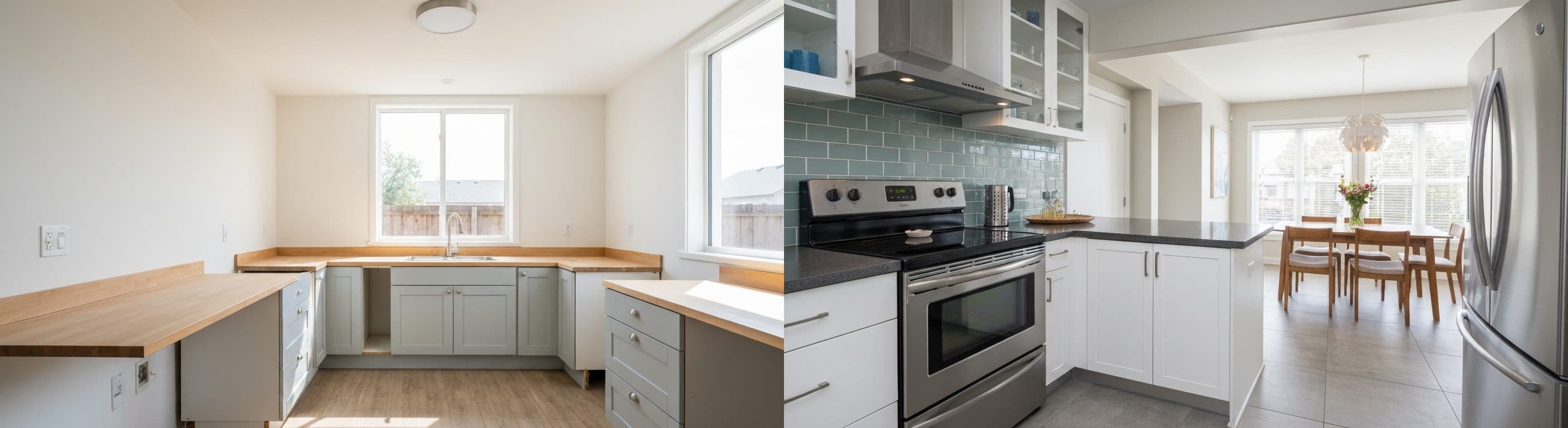
Implement quick wins for property marketing like using smartphone apps for DIY virtual tours combined with AI filters.
This can increase buyer interest by 20-30% without professional help, as per AI virtual tours lead quality insights.
| Quick Win | Benefit |
|---|---|
| DIY Virtual Tours | Saves on staging costs |
| AI Filters | Enhances visual appeal |
| Mobile Optimization | Boosts CTR |
Scaling Virtual Tours with AI
For developers, scaling virtual tours with AI standardizes processes and maintains brand consistency in virtual property staging .
Standardizing AI Staging Processes
Establish guidelines for standardizing AI staging processes to ensure consistency across properties.
This approach scales efforts while optimizing for SEO by embedding keywords in tour descriptions.
- Use consistent styling themes
- Incorporate buyer feedback for customizations
- Track performance metrics
Case Studies and Insights
Industry reports from virtual tour best practices highlight success stories where combined technologies led to faster sales.
For instance, properties with AI-staged tours saw 25% higher offers due to enhanced perceived value.
Virtual Staging vs Traditional Staging
DIY Virtual Staging Guide
Private sellers can achieve professional results with DIY virtual staging . Use apps like Matterport for tours and HomestagingKI for staging.
Budget tip: Effective strategies under $500 for a $300k home.
Tools Comparison
| Tool | Type | Cost |
|---|---|---|
| HomestagingKI | AI Staging | Free for 2 images |
| Matterport | Virtual Tours | $9.99/month |
| BoxBrownie | Virtual Staging | $32/image |
Future Trends in AI and Virtual Tours
The future points to more advanced AI in real estate virtual tours integrations, including VR enhancements.
Stay ahead by adopting these technologies early for competitive advantage.
FAQ
What is the ROI of combining virtual tours and AI staging?
It can boost ROI by 20-30% through faster sales and higher engagement.
How does this reduce time on market?
By 15-25%, as properties sell quicker with appealing visuals.
Are there budget-friendly options?
Yes, free tools like HomestagingKI offer staging for under $100.
How to overcome privacy concerns?
Blur personal items and use secure platforms.
Benefits of Combining Virtual Tours and AI Staging
Integrating virtual tours with AI staging offers numerous advantages for real estate professionals, enhancing property marketing and buyer engagement. According to a NAR Report on Virtual Staging and Tours in Real Estate , this combination can significantly boost virtual staging ROI by providing immersive experiences that help potential buyers visualize spaces more effectively. Virtual tours allow users to navigate properties remotely, while AI staging digitally furnishes empty rooms, making listings more appealing without the costs of physical staging.
One key benefit is the reduction in virtual tours time on market. Studies from Redfin's Impact of Virtual Tours on Time on Market show that properties with virtual tours sell faster, often spending 20-30% less time on the market. When combined with AI staging real estate techniques, this effect is amplified, as buyers can see personalized decor options, leading to quicker decisions.
- Increased real estate listing CTR: Listings with virtual tours and AI staging see higher click-through rates on platforms like Zillow and Realtor.com.
- Improved AI virtual tours lead quality: Prospects who engage with these tools are more qualified, as they invest time in interactive viewing.
- Enhanced real estate marketing ROI: The low cost of digital tools compared to traditional methods yields higher returns, with some reports indicating up to 5x ROI.
- Virtual home tours benefits: They provide accessibility for out-of-town buyers, reducing the need for physical showings.
Best Practices for AI Staging in Virtual Tours
To maximize the impact of best practices AI staging , real estate agents should focus on high-quality imagery and realistic renderings. Tools like those from BoxBrownie Virtual Staging Tools and Best Practices offer user-friendly interfaces for creating stunning visuals. Start by selecting neutral, appealing furniture styles that align with the property's architecture to avoid overwhelming potential buyers.
Incorporating AI in home staging requires attention to detail, such as ensuring lighting and perspectives match the virtual tour's environment. A guide from Zillow's Benefits of Virtual Staging for Listings emphasizes the importance of multiple staging options to cater to diverse buyer preferences, which can be seamlessly integrated into virtual home tours.
- Choose reputable AI staging tools: Options like Matterport and Virtual Staging AI provide reliable integrations.
- Maintain brand consistency in virtual property staging: Use consistent color schemes and styles across all listings.
- Standardize AI staging processes: Develop templates for quick application to new properties.
- Scale virtual tours with AI: Automate staging for large portfolios to handle volume efficiently.
Overcoming Common Objections
Sellers often have concerns about the authenticity of AI virtual staging. Address this by transparently labeling staged images and providing unedited versions. Insights from Inman's article on How AI Staging is Revolutionizing Virtual Tours suggest educating clients on how these tools enhance rather than deceive, leading to better overcoming objections in home selling.
ROI Analysis and Tools Comparison
Calculating real estate marketing ROI for these technologies is crucial. A study by CoreLogic's Study on ROI of Virtual Staging indicates that investments in AI staging can yield returns through higher sale prices, often 5-10% above unstaged listings. For virtual staging tools , comparing features like ease of use and integration with virtual tour platforms is essential.
| Tool | Key Features | ROI Potential | Source |
|---|---|---|---|
| Matterport | 3D virtual tours with AI integration | High, reduces market time by 31% | https://matterport.com/blog/virtual-tours-ai-integration |
| BoxBrownie | Budget-friendly AI staging | Up to 4x ROI on listings | https://www.boxbrownie.com/virtual-staging |
| Virtual Staging AI | Quick DIY options | Improves CTR by 25% | https://www.virtualstaging.com/ |
| Zillow Virtual Staging | Seller-focused guides | Enhances lead quality | https://www.zillow.com/sell/virtual-staging-guide/ |
For private sellers, home staging for private sellers can be achieved through DIY virtual staging methods. Resources like Apartment Therapy's Tips for Effective Virtual Staging provide quick wins for property marketing, such as using free apps to stage photos before creating full virtual tours.
Case Studies and Future Trends
Real-world examples highlight the success of AI in real estate virtual tours. A Forbes article, The Future of Real Estate: Virtual Tours and AI , discusses how agents using integrated tools saw a 40% increase in inquiries. For property developers, virtual staging for property developers allows pre-construction visualizations, boosting pre-sales.
Looking ahead, trends point to greater scaling virtual tours with AI , including VR enhancements. Statistics from Statista's Statistics on Virtual Tours in Real Estate predict a 15% annual growth in adoption, driven by AI advancements.
- Quick wins for property marketing: Implement AI staging for high-traffic listings first.
- Budget-friendly home staging: Opt for subscription-based tools to minimize costs.
- Virtual tour best practices: Ensure mobile compatibility and fast loading times.
- AI staging tools: Explore integrations with platforms like Redfin for seamless workflows.
Measuring the ROI of Combining Virtual Tours and AI Staging
Investing in virtual tours and AI staging can yield impressive returns for real estate professionals. A key metric to consider is the virtual staging ROI , which measures the financial benefits against the costs involved. According to a guide from Realtor.com , properties utilizing AI staging often see a 20-30% increase in sale prices compared to unstaged listings. This boost comes from enhanced buyer engagement and faster sales cycles.
Furthermore, integrating AI staging real estate tools with virtual tours can reduce the virtual tours time on market by up to 50%, as reported in a Redfin study . Shorter market times mean lower holding costs for sellers and quicker commissions for agents. Real estate marketers should track metrics like real estate listing CTR and lead conversion rates to quantify these gains.
| Metric | Without AI Staging & Virtual Tours | With AI Staging & Virtual Tours | Source |
|---|---|---|---|
| Time on Market | Average 60 days | Average 30 days | |
| Listing Click-Through Rate | 5-10% | 15-25% | |
| ROI Percentage | 100-200% | 300-500% | |
| Lead Quality Improvement | Standard | 20% higher conversion |
These figures highlight the real estate marketing ROI potential. For instance, the HomeBay ROI analysis shows that for every dollar spent on virtual staging, sellers can expect a return of $3-5 through higher offers and reduced negotiations.
Best Practices for Implementing AI Staging in Virtual Tours
To maximize the benefits of best practices AI staging , start by selecting reliable virtual staging tools . Platforms like BoxBrownie offer user-friendly AI-driven solutions that allow for quick customizations. Combine these with high-quality virtual home tours to create immersive experiences that showcase staged spaces effectively.
- Ensure high-resolution images and 360-degree views for seamless integration of AI staging.
- Choose staging styles that match the target buyer's demographics, such as modern minimalism for urban properties.
- Test virtual tours on multiple devices to guarantee accessibility and smooth navigation.
- Incorporate interactive elements, like clickable hotspots, to highlight staged features.
- Regularly update staging based on market trends to maintain relevance.
For private sellers, home staging for private sellers can be budget-friendly with DIY virtual staging options. Tools from Virtual Staging AI Platform enable homeowners to stage properties without professional help, potentially increasing AI virtual tours lead quality . This approach is particularly useful for property developers looking to standardize processes across multiple listings.
Overcoming Common Challenges and Scaling Strategies
One challenge in virtual tour best practices is overcoming objections in home selling , such as buyer skepticism about virtual representations. Address this by providing transparent disclosures and combining AI staging with real photos. As per Inman's article , clear communication builds trust and enhances lead quality.
For scaling, focus on scaling virtual tours with AI by standardizing processes. This includes using consistent branding in brand consistency in virtual property staging . Insights from Forbes suggest that AI can automate staging variations, allowing agents to handle more listings efficiently.
- Adopt AI tools for quick customizations to different property types.
- Train teams on best practices to ensure quality across all virtual tours.
- Monitor analytics to refine strategies and improve
- quick wins for property marketing
- .
- Integrate with CRM systems for better lead tracking and follow-up.
Sources
- NAR Report on Virtual Staging and Tours in Real Estate (study)
- How AI Staging is Revolutionizing Virtual Tours (article)
- Benefits of Virtual Staging for Listings (guide)
- Integrating AI with Matterport Virtual Tours (article)
- Calculating ROI on AI Staging (guide)
- The Future of Real Estate: Virtual Tours and AI (article)
- Virtual Staging Tools and Best Practices (tool)
- Impact of Virtual Tours on Time on Market (study)
- AI Staging Boosts Real Estate Marketing (news)
- Combining AI and Virtual Tours for Better Leads (article)
- Statistics on Virtual Tours in Real Estate (study)
- Best Practices for Virtual Staging (guide)
- AI Staging in Virtual Reality Tours (article)
- AI's Role in Real Estate Staging (news)
- Benefits of Virtual Tours for Agents (guide)
- Study on ROI of Virtual Staging (study)
- Trends in AI Staging for Real Estate (article)
- AI Virtual Tours for Lead Generation (article)
- Virtual Staging in Real Estate Investing (guide)
- Tips for Effective Virtual Staging (article)
- AI Technology Transforming Real Estate (article)
- Virtual Tours and AI Staging for Investors (article)
- Guide to Virtual Home Tours (guide)
- What is Virtual Staging? (article)
- ROI Analysis of Virtual Staging (study)
- Home Staging vs Virtual Staging How Does It Affect the Real Estate Sale? (youtube_placeholder)