
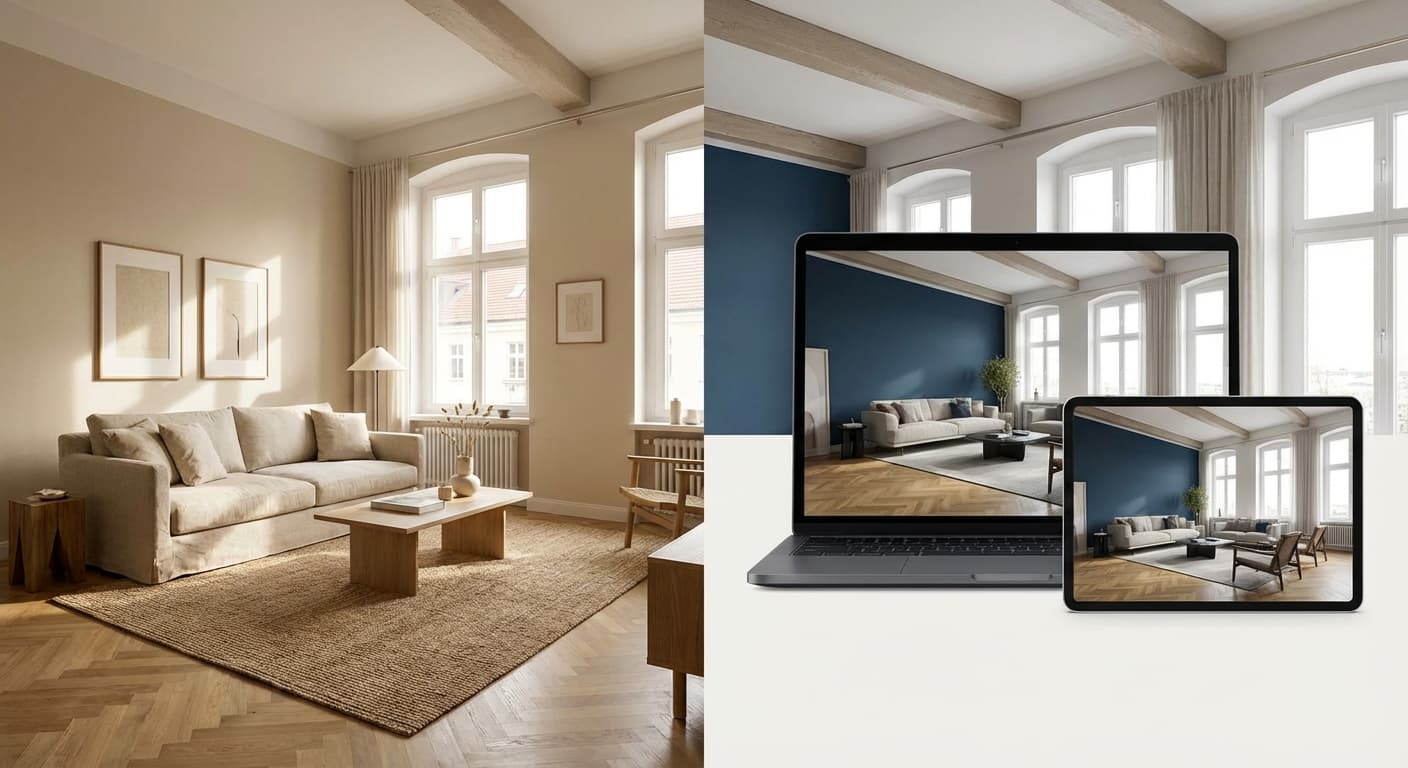
Wenn Sie sich 2026 zwischen physischem Homestaging und virtuellem Staging entscheiden, lautet die eigentliche Frage nicht „was ist besser?“, sondern was verkauft sich besser für Ihre Immobilie, Ihren Markt und die Käuferreise. Käufer entdecken Immobilien zuerst online, treffen aber emotionale Entscheidungen immer noch persönlich. Deshalb ist die effektivste Strategie im Immobilienmarketing 2026 oft ein Hybridansatz: Virtuelles Staging, um Klicks und Besichtigungen zu generieren, und physisches Staging, um Angebote zu sichern – insbesondere in wettbewerbsintensiven Segmenten.
Dieser Artikel beleuchtet Homestaging vs. Virtual Staging 2026 mit praktischen Kostenübersichten, ROI-Berechnungen und Entscheidungsrahmen für Immobilienmakler, private Verkäufer und Bauträger – in Deutschland, der EU und den USA.
Homestaging vs. Virtual Staging 2026: Die Ein-Satz-Antwort
Im Jahr 2026 verkauft sich virtuelles Staging besser am oberen Ende des Verkaufstrichters (mehr Klicks, Speicherungen, Anfragen), während physisches Homestaging am unteren Ende des Trichters besser abschneidet (höherer wahrgenommener Wert bei Besichtigungen, weniger Einwände, stärkere Angebote). Die erfolgreichsten Angebote kombinieren zunehmend beide Ansätze, im Einklang mit breiteren europäischen Immobilientrends und dem digital-orientierten Käuferverhalten.
Was hat sich bis 2026 geändert? Wichtige Verschiebungen bei Käufern und Plattformen
Im Vergleich zu den Jahren 2023–2024 werden Staging-Entscheidungen im Jahr 2026 maßgeblich von drei dynamischen Kräften beeinflusst, die den Immobilienmarkt und das Käuferverhalten grundlegend verändern:
Diese Verschiebungen stimmen mit Marktprognosen wie dem European Real Estate Outlook 2026 und breiteren plattformgetriebenen Marketingveränderungen überein, die in den EU Property Marketing Trends beschrieben werden.
Definitionen (Damit wir über dasselbe sprechen)

Physisches Homestaging (traditionelles Staging)
Ein professioneller Stager richtet die Immobilie mit echten Möbeln, Beleuchtung, Textilien und Dekoration ein und stylt sie – optimiert für Fotos und persönliche Besichtigungen. Dies ist das, was die meisten Menschen unter den Vorteilen des traditionellen Homestagings verstehen.
Virtuelles Staging (digitales Staging)
Möbel und Dekoration werden digital zu den Listing-Fotos (manchmal auch zu Videos) hinzugefügt. Die Immobilie bleibt physisch leer oder leicht möbliert, aber die Marketingbilder zeigen eine gestylte Version. Für einen Marktüberblick siehe Home Staging vs Virtual Staging: Pros and Cons und die Plattformperspektive in Virtual Staging: The Future of Home Selling.
Immobilien-Staging-Vergleich: Was verkauft sich tatsächlich besser?

1) Lead-Generierung (Klicks, Speicherungen, Anfragen)
Virtuelles Staging gewinnt hier oft, da es schnell, konsistent und auf die Zielkäuferpersona zugeschnitten werden kann. Studien und Branchenberichte heben häufig eine verbesserte Interaktion hervor, wenn Angebote visuell „vollständig“ sind, einschließlich Ressourcen wie Zillows Berichterstattung über die Auswirkungen von virtuellem Staging und die Maklerperspektive in Redfins Studie zu virtuellem Staging.
2) Besichtigungs-zu-Angebot-Konversion (der „Realitätscheck vor Ort“)
Physisches Staging gewinnt tendenziell, wenn Käufer die Immobilie betreten. Es reduziert Unsicherheiten bezüglich Größe, Grundriss und Wohnlichkeit – insbesondere bei ungünstig geschnittenen Räumen, schlechten Lichtverhältnissen oder älteren Ausstattungen. Deshalb priorisieren viele Verkäufer Homestaging weiterhin für Premium- oder emotional motivierte Käufe, wie in ROI-Diskussionen zum Staging wie Homestaging-Statistiken und ROI widergespiegelt.
3) Preisstabilität (weniger Rabatte, stärkere Verhandlungsposition)

Wenn sich eine Immobilie bei Besichtigungen „bezugsfertig“ anfühlt, ist es weniger wahrscheinlich, dass Käufer sich auf Renovierungskosten oder Unsicherheiten fixieren. Physisches Staging kann einen höheren wahrgenommenen Wert unterstützen. Virtuelles Staging kann den Preis auch durch verbesserte erste Eindrücke stützen – aber nur, wenn das persönliche Erlebnis dem Versprechen entspricht.
Vorteile des traditionellen Homestagings (Immer noch wirkungsvoll im Jahr 2026)
Physisches Homestaging bleibt der Goldstandard, wenn es darum geht, bei Besichtigungen und Open Houses ein echtes emotionales Erlebnis zu schaffen. In Märkten wie Deutschland wächst die Akzeptanz von Staging weiter, mit lokalen Anleitungen und Vergleichen, die über Immowelts Homestaging vs. Virtuelles Staging Guide und praktische Tipps in Homestaging Tipps für den deutschen Markt verfügbar sind.
Wenn Sie speziell in Deutschland verkaufen, behalten Sie die Staging-Trends in Deutschland für 2026 und lokale Medienvergleiche wie Homestaging vs. Digital Staging (Deutschland) im Auge.
Vorteile des virtuellen Staging 2026: Warum es schnell wächst
Virtuelles Staging im Jahr 2026 ist längst keine „billige Photoshop-Möblierung“ mehr. Der Maßstab sind Fotorealismus, konsistente Beleuchtung, korrekte Perspektive und Stilabstimmung. Branchenkommentare und Prognosen – wie die des Forbes Real Estate Council zur Zukunft des virtuellen Staging – spiegeln wider, wie die digitale Präsentation zu einem Standardwerkzeug in der Listing-Strategie wird.
Für einen allgemeinen Überblick und Vergleiche siehe Vergleich: Traditionelles vs. Virtuelles Staging und die maklerzentrierten Vorteile in Vorteile des virtuellen Staging für Makler.
Kosten für virtuelles Staging in der EU vs. ROI von Homestaging in den USA (Realitätscheck 2026)
EU: Typische Kostenlogik für virtuelles Staging
In den EU-Märkten wird virtuelles Staging oft pro Bild abgerechnet, mit Mengenrabatten für Bauträger und Agenturen. Während die genauen Zahlen je nach Anbieter und Komplexität variieren, wird die Kostenstruktur in EU-fokussierten Berichten wie Idealistas Einblick in den EU-Markt für virtuelles Staging und breiteren EU-Trendberichten wie dem EU Real Estate Staging Trends Report ausführlich diskutiert.
USA: Staging-ROI ist immer noch ein wichtiges Argument
In den USA bleiben Diskussionen über den ROI von Staging prominent. Viele Makler rechtfertigen physisches Staging für hochwertige Immobilien, da selbst eine geringe prozentuale Verbesserung die Staging-Kosten übersteigen kann. Für datenbasierte Informationen konsultieren Sie Branchenressourcen wie die NAR-Forschung zum virtuellen Staging und breitere Staging-Statistiken über Statistas Hub für Immobilien-Staging-Statistiken.
Die praktische Erkenntnis: Wenn der Wert Ihrer Immobilie hoch ist oder der Wettbewerb intensiv, kann physisches Staging immer noch eine starke ROI-Logik für Homestaging in den USA liefern. Wenn Sie Geschwindigkeit, Reichweite und planbare Budgets benötigen, ist virtuelles Staging oft die klügere Standardoption.
Immobilien-Staging-Trends Deutschland & EU: Was Käufer erwarten
In Deutschland und vielen EU-Städten sind Käufer zunehmend mit digital optimiertem Marketing vertraut – solange es offengelegt und realistisch ist. Ratgeber wie ImmobilienScout24 zum virtuellen Homestaging zeigen, wie etabliert das Konzept geworden ist.
Gleichzeitig bleiben persönliche Besichtigungen entscheidend – insbesondere bei älteren Gebäuden, Fragen zur Energieeffizienz und Renovierungsbedarf. Makroberichte wie CBRE Real Estate Trends 2026 und PwC European Real Estate Trends bekräftigen, dass Käufer analytischer vorgehen – Staging muss daher Klarheit schaffen, nicht Verwirrung.
Virtuelles vs. Physisches Staging für Verkäufer: Entscheidungsmatrix (2026)
Wählen Sie physisches Homestaging, wenn…
Wählen Sie virtuelles Staging, wenn…
Wählen Sie einen Hybridansatz, wenn… (oft der Gewinner 2026)
Staging für Bauträger: Das Playbook 2026
Bauträger legen Wert auf die Verkaufsrate, konsistentes Branding und skalierbare Marketingressourcen. Im Jahr 2026 ist ein gängiger Ansatz:
Für zukunftsweisende Kommentare zur Entwicklung siehe Inmans Prognosen für 2026 zu Homestaging vs. Virtual Staging und einen breiteren Marktüberblick im European Real Estate Outlook von Knight Frank.
Das größte Risiko 2026: Die Foto-Realität-Lücke (und wie man sie vermeidet)
Virtuelles Staging kann nach hinten losgehen, wenn es unrealistische Erwartungen weckt. Die Lösung ist einfach: Bearbeitungen wahrheitsgemäß halten und virtuelles Staging in der Objektbeschreibung offenlegen. Viele Portale und Branchenverbände betonen zunehmend die Transparenz, im Einklang mit der Vertrauensorientierung, die in NAR-Leitlinien und -Forschung und gängigen Verbrauchertipps wie Realtor.coms Staging-Vergleich diskutiert wird.
Vorher-Nachher-Beispiele (Worauf Käufer reagieren)
Wenn Sie unsicher sind, ob Staging hilfreich ist, beginnen Sie mit einem einzelnen „Hero-Raum“ und messen Sie das Engagement. Hier sind Beispiele, die Sie auf Ihrer Angebotsseite oder in Ihrem internen Pitch Deck verwenden können:
Um den visuellen Effekt von Staging zu demonstrieren, sind Vorher-Nachher-Bilder unerlässlich. Sie zeigen potenziellen Käufern, wie ein Raum mit professioneller Gestaltung zum Leben erweckt wird und helfen Verkäufern, das Potenzial ihrer Immobilie optimal zu präsentieren. Solche Vergleiche können die Entscheidungsfindung erheblich beschleunigen und den wahrgenommenen Wert steigern.
Mit HomestagingKI können Sie die Wirkung schnell testen – inklusive 2 kostenloser gestagter Bilder – und entscheiden, ob Sie auf den gesamten Fotosatz skalieren möchten.
Workflow: Die hybride Strategie 2026, die oft gewinnt
Schritt 1: Für das Portal-Thumbnail inszenieren
Ihr erstes Bild ist Ihre Anzeige. Virtuelles Staging ist oft der schnellste Weg, ein sauberes, helles, emotional ansprechendes Hero-Bild zu erstellen – besonders bei leeren Immobilien.
Schritt 2: Für das Besichtigungserlebnis inszenieren
Wenn die Immobilie viele Besichtigungen haben wird (oder Sie sich in einem Premiumsegment befinden), fügen Sie eine leichte physische Inszenierung hinzu: entrümpeln, neutrale Textilien, warme Beleuchtung und einige echte Blickpunkte. Dies schützt das Vertrauen und reduziert Einwände.
Schritt 3: Für die Verhandlung inszenieren
Verwenden Sie konsistente Vorher-Nachher-Visualisierungen in Ihren Follow-up-E-Mails und Käuferpaketen. Dies stärkt den wahrgenommenen Wert und hilft Käufern, sich nach mehreren Besichtigungen positiv an die Immobilie zu erinnern.
YouTube: Homestaging vs. Virtual Staging (Trends 2026)
Wenn Sie ein zusätzliches, verkäuferorientiertes Vergleichsvideo für den US/EU-Kontext wünschen, können Sie auch einbetten: Immobilien-Staging-Vergleich für Verkäufer in den USA und der EU.
FAQ: Homestaging vs. Virtual Staging 2026
Fazit: Was verkauft sich 2026 besser?
Für die meisten Angebote im Jahr 2026 verkauft sich virtuelles Staging besser bei der Generierung von Nachfrage, während physisches Homestaging besser bei der Umwandlung von Nachfrage in überzeugende Angebote abschneidet. Wenn Sie das stärkste Gesamtergebnis erzielen möchten, nutzen Sie einen Hybridansatz: Virtuelles Staging, um Aufmerksamkeit und Buchungen zu gewinnen, und selektives physisches Staging (oder zumindest ehrliche, gut vorbereitete Räume), um bei der Besichtigung Vertrauen zu gewinnen.
Wenn Sie die Wirkung schnell testen möchten, beginnen Sie mit dem Angebot von HomestagingKI – 2 Bilder gratis – und skalieren Sie nur, wenn sich das Engagement verbessert: HomestagingKI Preise testen.
Sources
- Virtual Staging in Real Estate: NAR Report (study)
- Impact of Virtual Staging on Home Sales (article)
- Homestaging vs Virtuelles Staging in Deutschland (guide)
- EU Real Estate Staging Trends Report (study)
- Home Staging vs Virtual Staging: Pros and Cons (article)
- Virtual Staging: The Future of Home Selling (news)
- Staging Trends in Germany for 2026 (article)
- Redfin Virtual Staging Study (study)
- Virtual Staging in the EU Market (news)
- Homestaging vs Virtual Staging: 2026 Predictions (article)
- Real Estate Staging Statistics (study)
- Homestaging Tipps für den Deutschen Markt (guide)
- EU Property Marketing Trends (study)
- The Future of Virtual Staging in US Real Estate (article)
- Comparison: Traditional vs Virtual Staging (guide)
- Virtuelles Homestaging in Deutschland (guide)
- CBRE Real Estate Trends 2026 (study)
- Benefits of Virtual Staging for Agents (article)
- European Real Estate Outlook 2026 (study)
- Homestaging Statistics and ROI (article)
- Homestaging vs Digital Staging in Germany (news)
- PwC European Real Estate Trends (study)