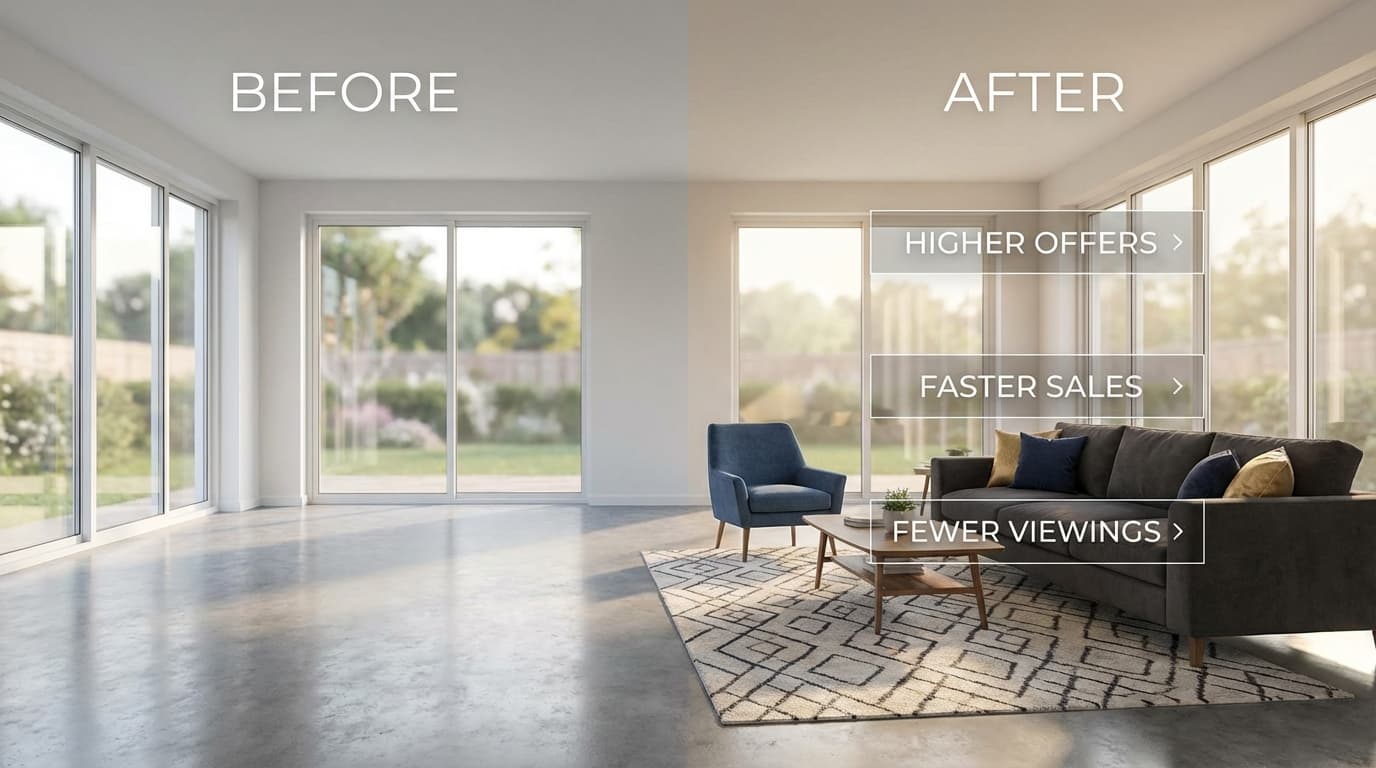
Virtual staging ROI is no longer a “nice-to-have”—it’s a measurable lever for higher offers, faster sales, and fewer low-quality viewings. This guide shows real estate agents, private sellers, and property developers how to calculate the ROI of virtual staging, when it works best, and how to use HomestagingKI to get professional results quickly (including 2 images free).
V1
Virtual Staging
Real Estate Marketing
Home Selling
Property Development
PropTech
Germany
EU
US
Warum der „Virtual Staging ROI“ die entscheidende Kennzahl im Jahr 2025 ist
Wenn Sie heute Immobilien vermarkten, konkurrieren Sie in einer Welt, in der der erste Blick zählt. Käufer entscheiden in Sekundenschnelle, ob ein Angebot einen Klick, eine Nachricht oder eine Besichtigung wert ist. Deshalb ist der Virtual Staging ROI zu einer praktischen Leistungskennzahl geworden – und nicht nur zu einem Designtrend. Virtual Staging hilft Ihnen, einen Raum optimal zu präsentieren, die visuelle Geschichte auf den Zielkäufer abzustimmen und unnötige Zeit für Besichtigungen zu reduzieren, die ohnehin keine Chance auf einen Abschluss gehabt hätten. Mit anderen Worten: Es geht nicht darum, Räume „hübsch“ zu machen. Es geht darum, dass Immobilienangebote performen.
Eine praktische ROI-Formel, die Sie noch heute anwenden können
Wohnzimmer (offener Grundriss): Vorher-Nachher-Vergleich mit virtuellem Staging, das den Raum wohnlicher und funktionaler erscheinen lässt.
Nutzen Sie dieses einfache Modell, um den Return on Investment (ROI) von virtuellem Staging zu schätzen. Es hilft Ihnen, die potenziellen Vorteile gegenüber den Kosten abzuwägen und eine fundierte Entscheidung für Ihre Immobilienvermarktung zu treffen, indem Sie den Virtual Staging Kosten vs. Nutzen direkt vergleichen:
Wie Virtual Staging höhere Angebote generiert (und Ihren Angebotspreis schützt)
Der Mechanismus hinter Virtual Staging höhere Angebote ist unkompliziert: Käufer orientieren sich an dem, was sie sehen. Wenn Fotos einen kohärenten Lebensstil und eine klare Raumfunktion zeigen, nehmen Käufer das Zuhause als „fertiger“, wohnlicher und oft wertvoller wahr.
Dies ist besonders relevant für Immobilien, bei denen der erste Eindruck entscheidend ist und potenzielle Käufer schnell überzeugt werden müssen, um das volle Potenzial zu erkennen. Es ist besonders wichtig für:
Leere Immobilien (Neubauten, leerstehende Wiederverkäufe), die ohne Möbel oft kahl und unpersönlich wirken.
Ungünstige Grundrisse (offene Ecken, schmale Wohnzimmer), deren Raumaufteilung und Nutzung schwer vorstellbar sind.
Veraltete Innenräume, bei denen vor dem Verkauf keine Renovierung geplant ist, aber ein moderner Look gewünscht wird.
Anlageobjekte, bei denen schnelle Vermarktung und Planungssicherheit für Investoren entscheidend sind.
Die Qualität der Angebote zählt mehr als deren Anzahl
Ein häufiges Missverständnis ist, dass es beim Staging nur darum geht, mehr Leads zu generieren. In der Praxis ist der größere Gewinn oft bessere Leads: Käufer, die den Grundriss bereits verstehen, sich die Möbelgröße vorstellen können und emotional bereits vor dem Betreten der Immobilie überzeugt sind. So erhalten Sie weniger „nur neugierige“ Besichtigungen und mehr ernsthafte Angebote.
Wie Virtual Staging schnellere Verkäufe ermöglicht (und warum Geschwindigkeit ROI bedeutet)
Hauptschlafzimmer: Vorher-Nachher-Vergleich mit virtuellem Staging, das den Raum einladend und funktional gestaltet.
Geschwindigkeit ist nicht nur Bequemlichkeit – sie ist Geld. Für private Verkäufer reduziert sie Stress und Überlappungskosten. Für Entwickler verbessert sie den Cashflow und reduziert den Finanzierungsdruck. Für Makler schafft sie Kapazitäten und verbessert die Pipeline-Geschwindigkeit. Das ist die wahre Bedeutung von Virtual Staging schnellere Verkäufe.
Entwickler-Perspektive: Schnellere Vorverkäufe und klarere Einheiten-Differenzierung
Für Virtual Staging für Projektentwickler ergibt sich der ROI oft aus einer schnelleren Absorption und einer klareren Positionierung ähnlicher Grundrisse. Staging kann Einheit A von Einheit B mit unterschiedlichen Stilen (z.B. familienfreundlich vs. Executive-Minimalismus) differenzieren, ohne die Bausubstanz zu verändern.
Wie Virtual Staging Besichtigungen reduziert (und gleichzeitig die Konversionsrate verbessert)
Mehr Besichtigungen sind nicht immer besser. Wenn Ihre Fotos Größe, Funktion oder Atmosphäre nicht vermitteln, ziehen Sie unpassende Käufer an, die „es sehen müssen, um es zu verstehen“. Das führt zu Terminproblemen, Verkäuferermüdung und Zeitverlust für den Makler. Das Ziel ist Virtual Staging weniger Besichtigungen – aber mit einem höheren Angebots-zu-Besichtigungs-Verhältnis.
Klärt den Zweck des Raumes (Büro vs. Gästezimmer vs. Esszimmer), sodass Käufer die Nutzungsmöglichkeiten sofort erkennen.
Zeigt realistische Möbelgrößen (damit Käufer keine Angst haben, dass 'es nicht passt'), was die Vorstellungskraft unterstützt.
Setzt Erwartungen (modern, gemütlich, hochwertig, minimalistisch) und zieht so die passenden Interessenten an.
Reduziert 'Grundriss-Verwirrung', die zu Besuchen mit geringer Kaufabsicht führt, da die Visualisierung Klarheit schafft.
Virtual Staging ROI nach Markt: Überlegungen für Deutschland, die EU und die USA
Küche + Essbereich: Vorher-Nachher-Vergleich mit virtuellem Staging, das den Raum funktional und einladend gestaltet.
Virtual Staging Deutschland: Erwartungen, Offenlegung und Käuferpsychologie
In Virtual Staging Deutschland legen Käufer oft Wert auf Transparenz und eine genaue Darstellung. Virtual Staging kann dennoch einen starken ROI liefern, insbesondere bei leerstehenden Wohnungen und Neubauten, aber Sie sollten Bearbeitungen realistisch halten und offenlegen, wenn Bilder digital möbliert wurden, um Vertrauen aufzubauen.
Virtual Staging EU: Compliance und Marketing-Integrität
Im gesamten Virtual Staging EU-Markt ist der sicherste Ansatz eine konsequente Offenlegung und die Vermeidung struktureller Falschdarstellungen (z.B. Ändern von Fenstern, Entfernen von Wänden, Verbergen von Schäden). Behandeln Sie Staging als Möblierung und Styling – nicht als Renovierung, um rechtliche Probleme zu vermeiden und die Integrität zu wahren.
Virtual Staging USA: Wettbewerbsfähige Listing-Medien und schnelle Markteinführung
In den Virtual Staging US ist die Qualität der Listing-Medien oft ein direkter Wettbewerbsvorteil. Virtual Staging kann eine effiziente Möglichkeit sein, die Präsentation schnell zu verbessern – insbesondere wenn Verkäufer den logistischen Aufwand eines physischen Stagings vermeiden möchten und schnell auf den Markt müssen.
Wann Virtual Staging den besten ROI liefert (und wann nicht)
Ideale Szenarien
Leere Häuser und Neubauten ohne Einrichtung, die ohne Möblierung oft unpersönlich wirken und ihr Potenzial nicht zeigen.
Objekte mit gutem Tageslicht, denen es jedoch an Gemütlichkeit und Wärme fehlt, um eine einladende Atmosphäre zu schaffen.
Räume mit unklarer Funktion (z.B. ein zusätzliches Schlafzimmer, eine Nische oder eine Ecke), deren Nutzungsmöglichkeiten visualisiert werden müssen.
Hochwertige Mietobjekte und möblierte Investment-Einheiten, bei denen der Lebensstil und das Ambiente entscheidend für die Vermarktung sind.
Marketingpakete für Projektentwickler, um verschiedene Einheiten oder Grundrisse ansprechend und differenziert darzustellen.
Weniger geeignete Szenarien (oder wo Vorsicht geboten ist)
Erhebliche Mängel am Objekt, die durch Fotos nicht ethisch vertretbar kaschiert werden können und eine Besichtigung enttäuschend machen würden.
Einzigartige Luxus-Interieurs, bei denen die Authentizität und der Originalzustand für die Zielgruppe von entscheidender Bedeutung sind.
Angebote, bei denen lokale Vorschriften eine strenge Offenlegung erfordern und diese nicht eingehalten werden kann, um rechtliche Probleme zu vermeiden.
Bereits professionell möblierte und gut fotografierte Räume, bei denen Virtual Staging keinen zusätzlichen Mehrwert bieten würde.
Wenn Sie unsicher sind, behandeln Sie Virtual Staging als Test: Inszenieren Sie die wichtigsten „Hero-Räume“ (Wohnzimmer, Küche, falls passend, Hauptschlafzimmer) und messen Sie die Veränderungen im Engagement. Mit HomestagingKIs Angebot, kostenlos zu homestagen (2 Bilder gratis), können Sie den ROI validieren, bevor Sie skalieren. Optionen finden Sie hier: HomestagingKI Preise.
Ein Schritt-für-Schritt-Leitfaden zur Maximierung des Virtual Staging ROI
1) Wählen Sie Räume, die Kaufentscheidungen beeinflussen
Priorisieren Sie die Bilder, die zuerst in Portalen und sozialen Vorschauen erscheinen. Typischerweise: Wohnzimmer, Hauptschlafzimmer und ein „Problemlöser“-Raum (Büro/Gästezimmer). Hier ist der ROI von Virtual Staging in Immobilien am höchsten, da er die Klickrate und die Qualität der Anfragen beeinflusst.
2) Passen Sie den Staging-Stil an das Käufersegment an
Verwenden Sie modernes, neutrales und regionsgerechtes Styling. Für Entwickler variieren Sie die Stile über verschiedene Einheiten hinweg, um die Attraktivität zu erweitern, ohne die Marke zu verwirren. Für private Verkäufer vermeiden Sie extreme Designs, die polarisieren könnten.
3) Bleiben Sie realistisch (und legen Sie offen)
Das leistungsstärkste Virtual Staging wirkt plausibel: korrekte Perspektive, realistische Schatten und eine Möbelgröße, die zum Raum passt. Vermeiden Sie strukturelle Bearbeitungen. Fügen Sie einen einfachen Hinweis wie „virtuell inszeniert“ in die Angebotsbeschreibung ein, wo dies erforderlich ist, um Transparenz zu gewährleisten.
4) Testen Sie Ihr Hauptbild per A/B-Test
Wenn das Portal es zulässt, testen Sie das erste Bild: leer vs. inszeniert oder zwei inszenierte Stile. Verfolgen Sie die Anfragen pro Tag und die Konversion von Besichtigung zu Angebot. Dies ist der schnellste Weg, den Virtual Staging Kosten vs. Nutzen gegenüber Verkäufern und Stakeholdern zu beweisen.
5) Nutzen Sie Vorher-Nachher-Bilder, um Aufträge und Genehmigungen zu gewinnen
Vorher-Nachher-Visualisierungen sind überzeugend in Angebotspräsentationen, Investoren-Updates und Verkaufsunterlagen von Entwicklern. HomestagingKI ist für die schnelle Lieferung von Vorher-Nachher-Bildern konzipiert – starten Sie hier: Holen Sie sich 2 kostenlose inszenierte Bilder.
Virtual Staging ROI: Höhere Angebote und schnellere Verkäufe erklärt
Virtuelles Staging in Deutschland: ROI und Tipps
FAQ: Virtual Staging ROI, Regeln und Best Practices
FAQ
Wie viele Fotos sollte ich virtuell inszenieren, um den ROI zu maximieren?
Für die meisten Angebote sind 3–6 Bilder ideal: das Hauptfoto (oft das Wohnzimmer), das Hauptschlafzimmer und ein weiterer Raum, der den Grundriss verdeutlicht (Büro/Esszimmer). Projektentwickler können mehr Bilder inszenieren, um verschiedene Einheitentypen abzudecken und deren Potenzial zu zeigen.
Funktioniert Virtual Staging auch bei bewohnten Immobilien?
Ja – besonders wenn die vorhandenen Möbel nicht zusammenpassen, zu persönlich sind oder der Raum visuell überladen wirkt. In einigen Fällen kann ein virtuelles 'Entrümpeln' plus leichtes Staging den wahrgenommenen Raum verbessern und Einwände von Käufern reduzieren, indem es eine neutrale und ansprechende Atmosphäre schafft.
Ist Virtual Staging in Deutschland und der EU erlaubt?
Grundsätzlich ja, aber Offenlegung und Genauigkeit sind entscheidend. Vermeiden Sie strukturelle Änderungen und kennzeichnen Sie Bilder deutlich als virtuell inszeniert, wenn dies von Plattformregeln oder lokalen Standards verlangt wird. Im Zweifelsfall halten Sie sich an die Richtlinien und beschränken Sie Bearbeitungen auf Möblierung und Dekoration, um Transparenz zu gewährleisten.
Was ist der größte Fehler, der den ROI von Virtual Staging zunichtemacht?
Unrealistisches Staging (falscher Maßstab, schwebende Möbel, inkonsistente Beleuchtung) oder irreführende Bearbeitungen, die bei Besichtigungen Misstrauen erzeugen. Ein hoher ROI resultiert aus glaubwürdigen Visualisierungen, die dem tatsächlichen Zustand der Immobilie entsprechen und realistische Erwartungen wecken.
Wie beweise ich den ROI von Virtual Staging einem Verkäufer oder Investor?
Führen Sie einen einfachen A/B-Test durch: Inszenieren Sie das Hauptbild virtuell, verfolgen Sie die Anfragenrate und die Konversion von Besichtigung zu Angebot über 7–14 Tage und vergleichen Sie dies mit ähnlichen Angeboten oder dem Zeitraum vor dem Staging. Kombinieren Sie die Ergebnisse mit geschätzten Einsparungen bei den Haltekosten, um den Mehrwert klar darzustellen.
Fazit: Virtual Staging ROI ist ein wiederholbares System, kein Glücksspiel
Wenn Virtual Staging realistisch ausgeführt und auf den richtigen Käufer zugeschnitten wird, ist es eine der skalierbarsten Möglichkeiten, die Leistung von Immobilienangeboten zu verbessern. Es unterstützt höhere Angebote, ermöglicht schnellere Verkäufe und reduziert unnötigen Zeitaufwand durch weniger, aber bessere Besichtigungen. Das ist der Kern des Virtual Staging ROI.
Wenn Sie den ROI schnell validieren möchten, beginnen Sie klein: Inszenieren Sie 2 Hero-Bilder kostenlos mit HomestagingKI und vergleichen Sie das Engagement. Starten Sie mit HomestagingKI (2 Bilder gratis)
Virtual Staging ist ein strategisches Instrument zur Steigerung des Immobilienwerts und zur Optimierung des Verkaufsprozesses.
Es führt nachweislich zu höheren Angeboten und verkürzt die Vermarktungsdauer erheblich.
Durch realistische Visualisierung werden qualifiziertere Interessenten angezogen und unnötige Besichtigungen reduziert.
Transparenz und die Einhaltung lokaler Vorschriften (insbesondere in Deutschland und der EU) sind entscheidend für den Erfolg.
HomestagingKI bietet eine schnelle und kosteneffiziente Lösung, um den ROI von Virtual Staging zu maximieren, beginnend mit 2 kostenlosen Bildern.